
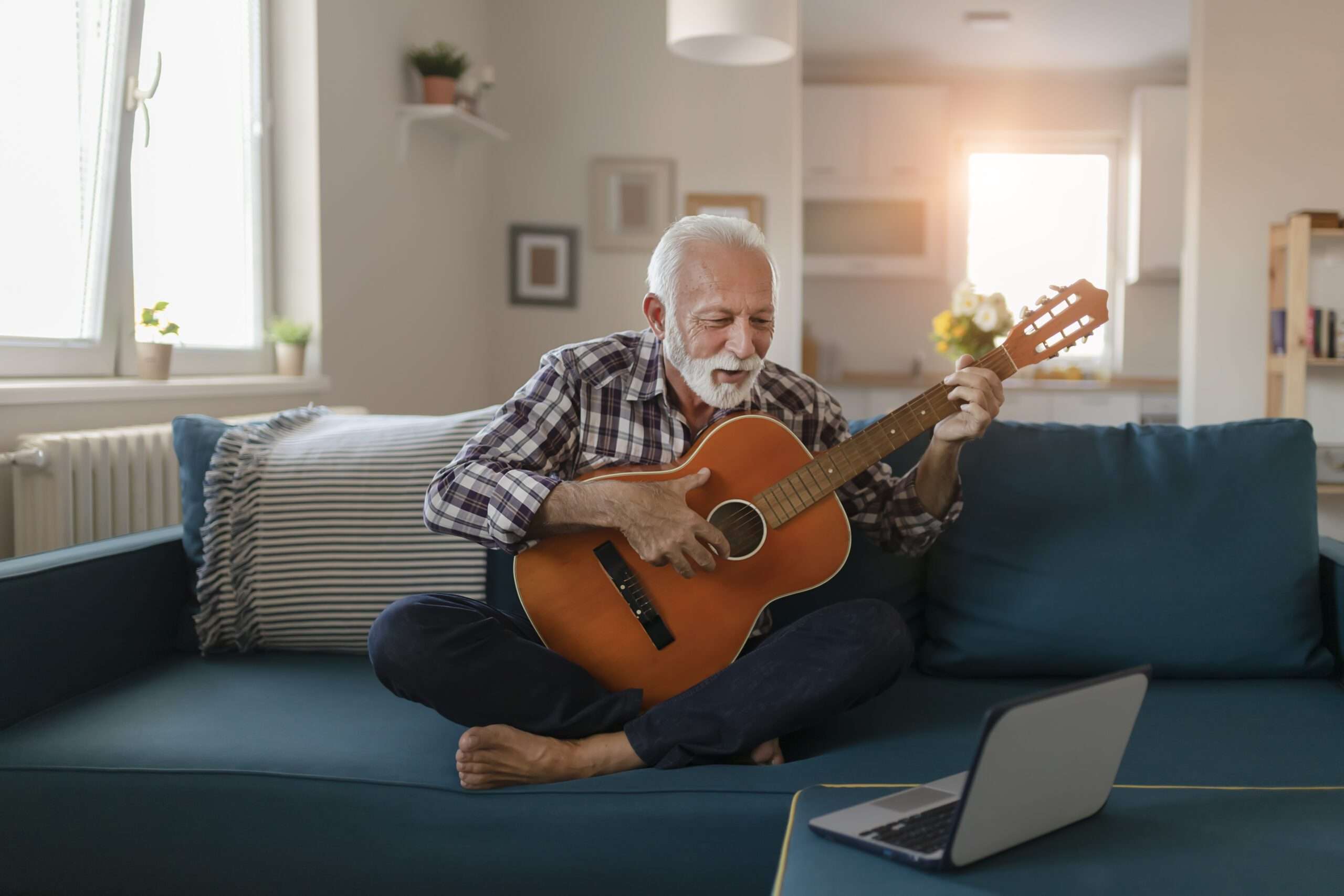
We all know that eating well, staying active, drinking plenty of water, and getting enough sleep is essential for staying healthy. But so is creativity, an often overlooked key factor in healthy aging.
How can being creative benefit us and the older adults we support?
Research suggests that incorporating art or participating in a music therapy program as we age can support our overall health and well-being by improving our mood and quality of life, decreasing feelings of loneliness, and promoting positive communication.
“Art and music are an incredible way to connect and communicate with others,” shared Kate Dupuis, Schlegel Innovation Leader in Arts and Aging at the Schlegel-UW Research Institute for Aging (RIA) and Sheridan College. “Everyone is musical (even if we don’t think we are), and there is no right or wrong way to engage with music. You can listen, tap your foot, or dance; you don’t have to sing.”
Dupuis is the lead researcher for the Intergenerational Jamboree, an innovative music therapy project that connects young children and older adults through music, movement, and song. Developed in 2017 by team members at a long-term care (LTC) home in Guelph, the program recently received additional funding from the Centre for Aging + Brain Health Innovation (CABHI) to expand to 15 more sites across Ontario. This funding will help support the implementation and sustainability of the Jamboree program in more LTC homes, retirement communities, and adult day programs.
Ways to Incorporate Music Therapy
- Talk about personal music preferences. Connecting through songs from someone’s youth or those tied to meaningful life events (e.g., weddings, lullabies) can create strong emotional connections.
- Music can bring up long-forgotten memories. For bilingual residents living with dementia, familiar songs in their first language can be especially powerful. Try to find music from their younger years in their first language.
- If residents are unable to sing, they can use instruments or simply move their bodies to the music. Make sure the residents have choices and allow them to engage in ways that are comfortable for them. Musical experiences often vary based on cultural background.
- Include songs in different languages based on the residents’ interests. Even if someone doesn’t understand the lyrics, they may still connect with the meaning behind the music.
Potential Benefits of Music Therapy
For older adults, music therapy can:
- Improve mood
- Decrease feelings of loneliness
- Increased quality of life
- Support positive communication
For care partners and team members, music therapy can offer:
- Direct benefits related to the provision of/observation of music therapy sessions
- Indirect benefits related to increased enjoyment of their care experience and observing the benefits of music therapy for their care recipients
To learn more about Music Therapy and the Intergenerational Jamboree, visit our website at: the-ria.ca/research/research-projects/intergenerational-jamboree/.